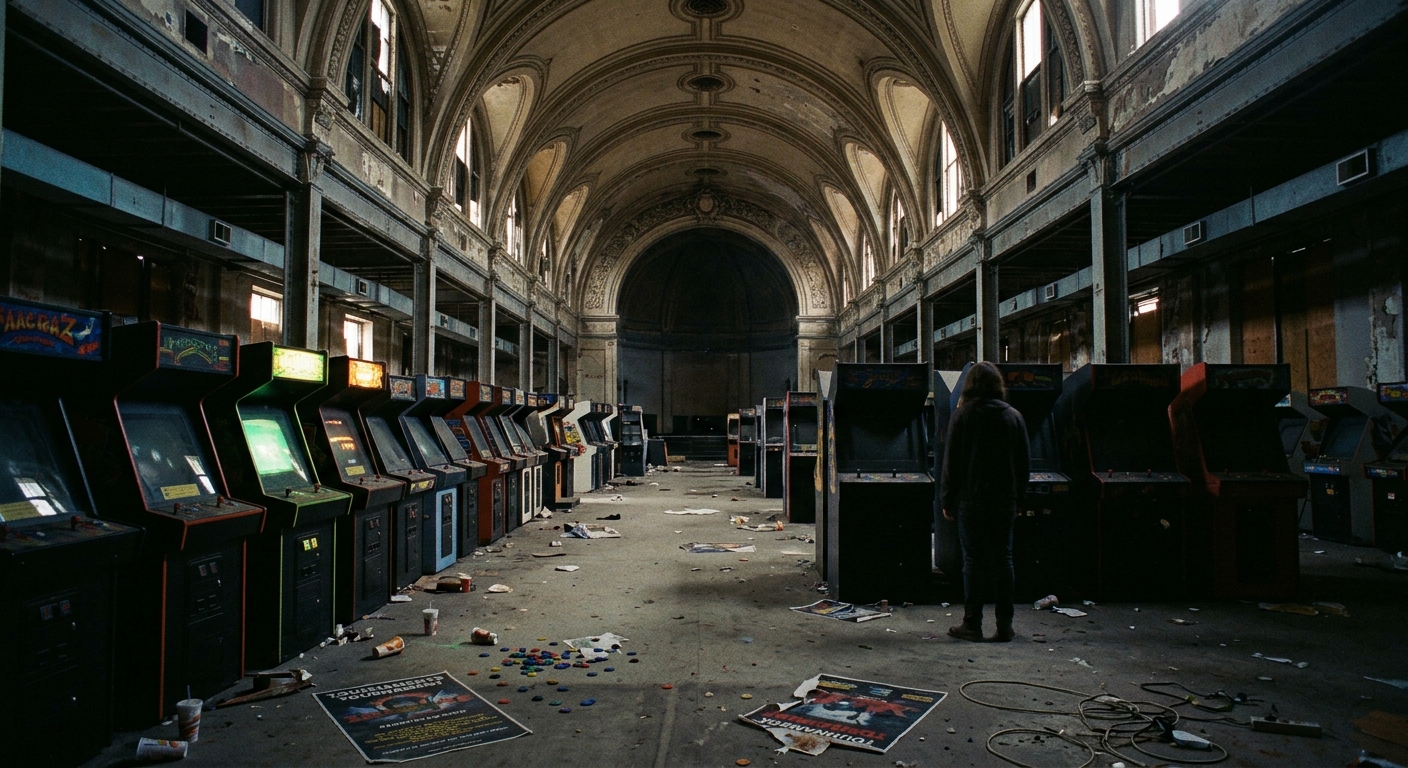
In the fall of 2021, Axie Infinity had 2.7 million daily active users. The game’s native token, SLP, was trading at prices that let Filipino players earn more grinding digital monsters than they could at traditional jobs. Venture capital was pouring into blockchain gaming at a pace that suggested a multi-hundred-billion-dollar industry was imminent. NFT game assets — digital land parcels, in-game characters, virtual weapons — were trading for amounts that would buy a car.
By April 2026, Axie Infinity has approximately 5,500 daily active users. SLP is functionally worthless. The venture capital has evaporated. And a comprehensive analysis by crypto market-maker Caladan, published this month, has put a number on what everyone in the industry privately knew: 93% of Web3 gaming projects are now effectively dead.
This is the story of how $12 to $15 billion in capital was committed to a model that was broken at its foundation — and what, if anything, comes next.
The Numbers
Caladan’s report, covering the period from 2020 through early 2026, contains several figures that are worth sitting with:
- 93% of all Web3 gaming projects are classified as effectively dead — no meaningful user activity, abandoned development, or team dissolution
- $12 billion in venture capital, token sale proceeds, and NFT revenue committed to the sector since 2020 (other estimates place the figure closer to $15 billion)
- 95% average decline in token prices from 2022 peaks
- 99% decline in quarterly VC funding to game studios from peak (Q4 2021) to present
- 58% of VC firms that invested in Web3 gaming have realized losses between 2.5% and 99%
- By May 2025, a single $9 million deal represented the entire global industry’s monthly funding total
These are not figures from a sector that stumbled. They are figures from a sector that, in its current form, does not exist as a going concern.
What GameFi Actually Was
To understand the collapse, it helps to be precise about what “Web3 gaming” meant in practice — because the category contained multitudes, and not all of them failed for the same reasons.
Play-to-Earn (P2E)
The dominant model from 2020-2022 was play-to-earn: players invest in NFT assets (characters, land, items), play games using those assets, and earn tokens as rewards. Those tokens can be sold for real money, creating a feedback loop where:
- New players buy in, driving up NFT prices and token prices
- Existing players earn rewards denominated in those tokens
- High token prices attract more new players
- Repeat until inflows stop
This model was described as “a new paradigm for game economies.” In retrospect, it was a Ponzi mechanism wearing a game’s clothing. The economics required constant new capital inflows to maintain token value. The moment growth slowed, rewards thinned, and the incentive to keep playing evaporated simultaneously for the existing base.
Axie Infinity’s collapse was the clearest example. At its peak, 2.7 million daily active users were generating SLP token rewards. As token prices fell in early 2022, players started leaving. Fewer players meant less demand for Axie NFTs, which crashed their prices. Players who had borrowed money to buy their initial Axie NFTs to play the game suddenly held assets worth a fraction of what they owed. The model ate itself.
NFT-Gated Gaming
A second model charged players for “ownership” of in-game assets as NFTs, with the pitch that these items would hold or appreciate in value. The problem: game publishers could always mint more supply, game servers could be shut down, and the secondary market for in-game NFTs was entirely dependent on the game maintaining an active player base. When games died — as 93% did — the NFTs went to zero.
Tokenized Guild Economies
Gaming guilds like Yield Guild Games (YGG) raised hundreds of millions by acquiring gaming NFTs and renting them to players in the Philippines, Vietnam, and other developing markets. The guilds earned a cut of player rewards. This model worked exactly as long as the underlying game tokens had value — which, as noted, was not long. YGG’s governance token now trades 99.6% below its November 2021 peak.
Why Gamers Never Showed Up
The simplest and most damning summary of the collapse: gamers did not want this.
At the height of the mania in 2022, surveys found that only 12% of gamers had tried a crypto game. The industry had raised tens or hundreds of millions of dollars per studio before determining whether the product was something anyone would choose to play.
The core problem was incentive misalignment. Crypto games were designed for investors first, players second — or not at all. The financial mechanics were the product. The games themselves were typically inferior to free-to-play titles in graphics, gameplay depth, narrative quality, and user experience. Players were expected to fund the experience through NFT purchases before knowing whether they would enjoy it.
Traditional gaming is free-to-play with optional spending. Crypto gaming was pay-to-play with mandatory tokenomics. The audiences are not the same.
Several specific design failures compounded this structural problem:
Token reward dilution: To sustain player economies, games continuously issued token rewards. But issuing more tokens without corresponding increases in game activity diluted the value of existing tokens. Players who held rewards saw them depreciate even while playing regularly.
Speculation over gameplay: Studio resources went into token economics, blockchain integration, and NFT mint mechanics rather than gameplay. Axie Infinity’s core game — a simplified card battle system — was less engaging than games available for free on mobile in 2015.
Accessibility barriers: Buying crypto, setting up a wallet, purchasing NFTs, and bridging assets to gaming chains represented approximately 15 steps before a new player could take their first action in the game. Traditional games require: download, launch.
Community fragmentation: Because players’ financial interests diverged (early entrants had lower-cost NFTs; late entrants paid peak prices), game communities quickly became hostile. “Whales” who held large token positions advocated for different economic policies than small players. Governance became toxic.
The Hamster Kombat Case Study
Perhaps no single example captures the sector’s dysfunction better than Hamster Kombat, a Telegram-based clicker game that launched in early 2024 with the promise of an airdrop to its massive user base.
At its peak, Hamster Kombat claimed over 300 million users — one of the largest user bases of any mobile game in history, if accurate. The game launched its HMSTR token airdrop in September 2024. The token immediately dumped 80% as the user base liquidated their airdrop allocations, then lost a further 96% of users within six months.
What Hamster Kombat had was not a player base — it was an audience of airdrop hunters who had no interest in the game itself. The “users” were never gamers. They were people performing the minimum required interactions to qualify for free tokens. Once the tokens were distributed and proven nearly worthless, they left.
This is the fundamental fraud at the heart of much of Web3 gaming’s “user” metrics: the incentive to claim an airdrop is not evidence of a game that people want to play.
What the Capital Actually Built
Of the $12-15 billion deployed into Web3 gaming:
- A handful of technically competent blockchain gaming platforms — Immutable X, Ronin, Beam — with real infrastructure but small active userbases
- Hundreds of unfinished games — projects that raised capital, launched tokens or NFTs, and shipped either nothing or products that failed to retain players beyond the first week
- Extensive NFT marketplace infrastructure — most of which now processes minimal volume
- Significant legal precedent — enforcement actions, class action lawsuits from investors who lost money, and regulatory frameworks that now treat game tokens as potential securities
Of the 7% of projects still categorized as “alive,” most are operating at dramatically reduced scale. Even the sector’s technical survivors — Axie Infinity’s Ronin blockchain, The Sandbox, Decentraland — have tiny active user bases relative to their peak valuations.
What Comes Next (If Anything)
The “93% dead” figure does not mean the intersection of gaming and blockchain is permanently finished. It means the specific model that dominated the 2020-2023 boom — P2E, NFT-gated access, unsustainable token emission — has failed. A smaller, more honest version of blockchain gaming may be possible.
What Might Actually Work
True asset ownership without financial dependence: Players who want verifiable ownership of in-game items — provably rare, tradeable across platforms — is a genuine use case. But this only works if the underlying game is worth playing, the ownership provides gameplay value rather than just investment speculation, and the secondary market is an optional feature rather than the product itself.
On-chain provenance for digital collectibles: The collectibles market (cards, skins, characters) has proven demand. Blockchain can provide genuine scarcity and authenticity guarantees in ways that centralized databases cannot. This is a narrower claim than “blockchain will transform gaming” but it is a defensible one.
Game guilds as community infrastructure (without financial extraction): Organized player communities that share strategies, coordinate activities, and support new players have genuine value. Stripping out the financial extraction layer and keeping the community coordination layer might produce something sustainable.
Casual/hyper-casual games with opt-in crypto wallets: The least friction model — a game that is actually good, playable without any crypto involvement, with an optional wallet integration for players who want it — has not yet been seriously attempted by well-funded studios. This is where survivor projects are now pointing.
What Will Not Recover
Play-to-earn as a primary economic model: The math does not work without constant new capital inflows, and that structure is functionally identical to a pyramid scheme. No regulatory environment will permit it at scale, and no user base will sustain it.
NFTs as investment assets within games: Once players understand that game publishers can mint unlimited supply, shut down servers, and eliminate the utility of NFTs at will, the investment thesis collapses. “True ownership” is meaningful only if the game server exists, the developer honors it, and the community persists — all factors outside the NFT holder’s control.
The Security Dimension
The Web3 gaming collapse has a security dimension that is easy to overlook in the broader narrative of economic failure: the billions in capital that flowed through game platforms also attracted significant theft.
The Ronin bridge — Axie Infinity’s sidechain — suffered the largest DeFi hack at the time of its occurrence in March 2022, when the Lazarus Group stole $625 million. The Ronin hack was enabled by exactly the kind of rushed infrastructure that characterized the P2E boom: validators set up hastily to handle explosive user growth, with governance and key management that had not been adequately reviewed.
Gaming protocols that prioritized growth over security left users exposed. As the gaming sector contracts and survivors focus on building sustainable products, security architecture must be treated as a first-order constraint rather than a post-launch consideration.
Conclusion
The Web3 gaming boom was built on a thesis that never survived contact with reality: that players would accept significantly worse games in exchange for the ability to earn money playing them, and that the earnings would be sustained by a self-reinforcing economy rather than a constant stream of new investors.
Neither assumption held. Gamers chose quality over tokenomics. The economies collapsed when growth stopped.
What the sector leaves behind is not a foundation for the next era — it is a warning. The next wave of blockchain applications in gaming, if it comes, will need to start with the question that the boom era never seriously asked: is this something people actually want to use?
This article is provided for informational purposes only and does not constitute investment advice.
Sources: